

Garden Tools for all Seasons
The Intimate Connection Between Craft, Care, and the Earth
The First Touch of Metal and Wood
Every gardener remembers the first moment they hold a tool that truly fits their hand. It feels like an extension of intention, transforming effort into grace. Garden tools are not simply instruments of labor; they are companions in the act of creation. The smooth grain of a wooden handle, the cool resilience of steel, the weight balanced just enough to make motion fluid, all these details turn work into art. A spade cuts more than soil; it opens possibilities. A trowel does not dig alone; it collaborates with patience. When one begins to understand this quiet partnership, gardening shifts from task to ritual. Each stroke in the earth carries precision born of trust between hand and tool.
Before the hum of machinery and the convenience of mass production, tools were shaped by artisans who understood both craft and soil. They forged blades from tempered steel, carved handles from ash or hickory, and created implements designed to last generations. Even today, such tools hold a timeless appeal. They speak of endurance, of the honest simplicity that connects touch to texture. To choose a tool is to choose a rhythm of work, to commit to a dialogue with the land that rewards patience more than speed. The first touch of metal and wood is the gardener’s handshake with the earth itself.
The Design of Purpose
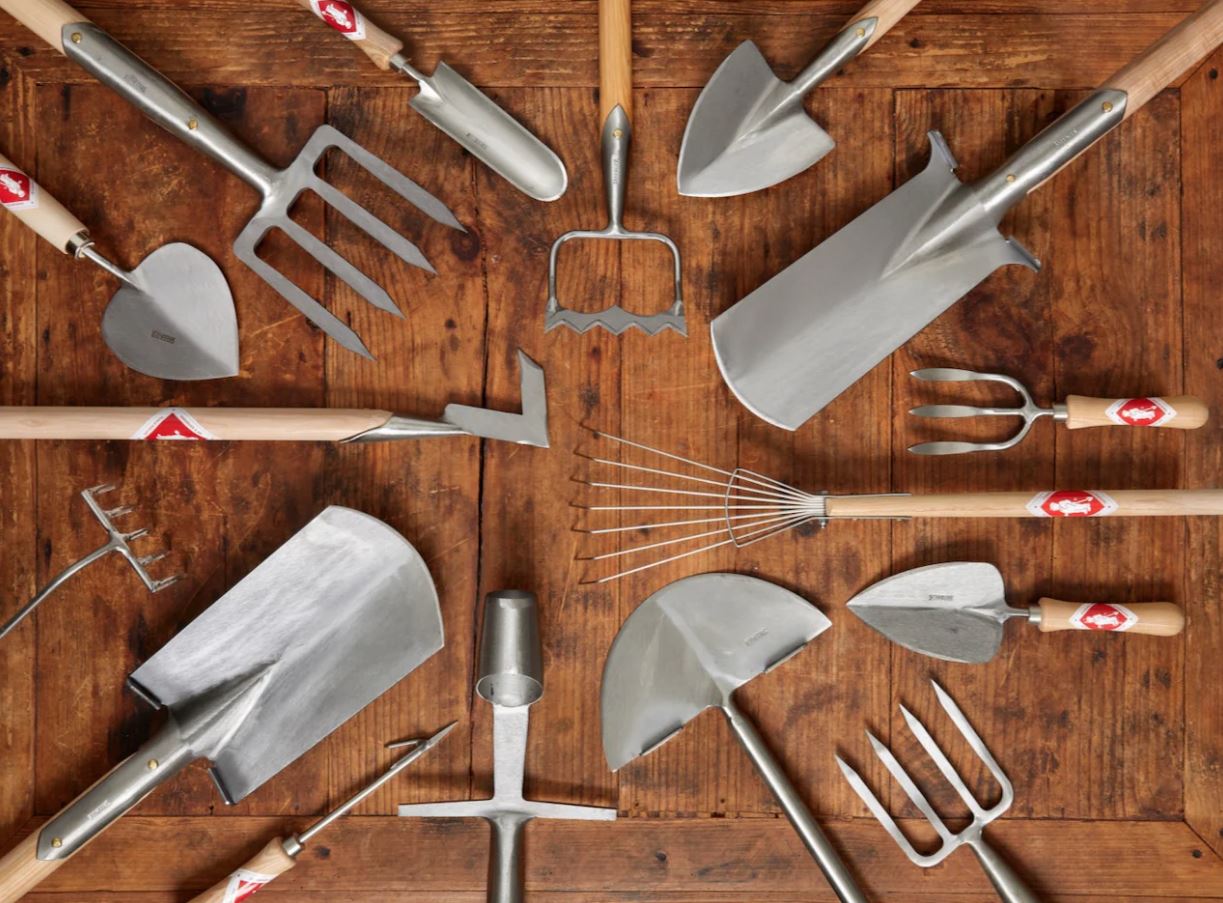
Every garden tool tells a story of function. A hoe is not just for turning ground but for maintaining space between what grows and what must be removed. The pruning shears are sculptors in disguise, shaping the garden’s form with precision. The rake, often overlooked, gathers memory in every sweep, fallen leaves, petals, and remnants of the passing season. The watering can carries both weight and gentleness, controlling flow with subtle artistry. Each tool, in its own way, mirrors a human virtue: the hoe embodies discipline, the rake patience, the pruner discernment, the spade courage. Their design reflects centuries of refinement guided by necessity and observation.
Modern tools have evolved, yet their essence remains the same. Stainless steel resists rust, ergonomics reduce strain, and mechanical aids extend human endurance. Yet no innovation can replace the intimacy of a well-balanced hand tool. Simplicity often triumphs over complexity in the garden, where precision and control outweigh power. A gardener’s best tools are those that disappear in use, becoming invisible extensions of will. It is in that invisibility that mastery lives. A tool is most alive when it moves without thought, when its shape matches purpose so perfectly that it feels like instinct.
The Care of Instruments and Intention
Neglect dulls more than edges, it dulls intention. Garden tools demand care not only to preserve their utility but to honor the work they make possible. After every session, a simple ritual begins. Soil is brushed away, blades are rinsed, and metal is dried to prevent corrosion. Wooden handles are rubbed with oil, restoring suppleness and preventing cracks. Sharpening becomes meditation, a steady rhythm of restoration that mirrors the maintenance of the garden itself. Each act of care renews both the tool and the gardener’s awareness of its value. Tools that receive this attention grow more efficient with age, their surfaces molded subtly to the contours of the hands that wield them.
Neglect, by contrast, is an act of forgetfulness. Rust eats at blades, splinters form in handles, and motion becomes clumsy. The connection between tool and gardener weakens. Those who tend their instruments cultivate respect, not just for their equipment but for the craft of gardening itself. It is said that a well-kept tool collection reflects a well-kept mind. The clarity required to care for what sustains labor extends inward, shaping habits of mindfulness. In this way, maintenance becomes both practical and philosophical, reminding the gardener that creation and preservation must always coexist.
The Evolution of the Modern Gardener’s Kit
Over time, the gardener’s toolkit has transformed, adapting to changing landscapes and lifestyles. Where once a simple spade and hoe sufficed, now irrigation wands, ergonomic handles, and precision snips join the collection. Technology has introduced electric trimmers and lightweight alloys, yet even with these advancements, the essence of tool use remains rooted in touch. The gardener must still feel the soil’s resistance, still sense when pressure must ease or strength increase. Digital devices may track moisture or measure sunlight, but they cannot replace intuition. The modern kit merges efficiency with experience, offering possibilities without discarding heritage.
Some innovations arise from necessity. Urban gardeners favor compact multi-tools designed for balcony pots and small raised beds. Permaculture enthusiasts value sustainability, choosing tools crafted from recycled materials. Meanwhile, heritage gardeners seek out traditional implements, appreciating the craftsmanship that technology often overlooks. The balance lies in choosing tools that match both philosophy and practice. No two gardens are identical, and neither are their needs. What remains constant is the gardener’s relationship to their implements, a partnership built on familiarity, purpose, and care that endures through every evolution of design.
The Weight of Work and the Ease of Balance
There is poetry in the way a tool moves through soil when its balance is true. The weight of a shovel’s head, the length of a hoe’s handle, the curvature of a spade’s blade, all must harmonize to reduce strain and increase precision. This balance determines the rhythm of labor, shaping whether a day’s work leaves exhaustion or satisfaction. The most refined tools are those that seem to guide themselves, turning heavy soil with minimal effort. Balance, like all aspects of gardening, depends on awareness. The gardener adjusts stance and grip instinctively, responding to resistance as one might to a conversation.
Even the smallest adjustment, a handle wrapped for grip, a blade honed to a finer edge, transforms experience. The wise gardener customizes their tools not for luxury but for harmony. They know that comfort allows endurance, and endurance allows excellence. Over time, the hand reshapes the handle, and the handle reshapes the hand. This reciprocity reveals a truth often overlooked: that the gardener’s strength lies not in dominance but in cooperation with material and motion. To work well is not to fight the ground but to move with it, to find the balance between force and flow that makes effort seem effortless.
The Soul of Craftsmanship
Every handmade garden tool carries the touch of its maker. The blacksmith who tempers the steel, the carpenter who sands the handle, the artisan who balances weight and shape, all contribute to an unspoken lineage of care. These tools carry integrity because they were born from skill, not mass production. They age gracefully, their imperfections becoming reminders of use and time. In a world of disposable objects, such craftsmanship feels almost radical. It invites a slower relationship with ownership, one that values repair over replacement. When a handle breaks, it is mended. When a blade dulls, it is sharpened. Through these actions, continuity survives.
Tools made by hand possess a soul that cannot be replicated by machines. They hold warmth even when unused, as if anticipating their next encounter with earth. The gardener who wields them becomes part of a continuum stretching back centuries, where labor and artistry were inseparable. This connection deepens respect not only for tools but for all acts of creation. Every notch, scratch, and worn surface becomes a record of care, a visual story of work done honestly and with devotion. The soul of craftsmanship, therefore, is not in perfection but in persistence. It endures as long as someone is willing to hold, use, and preserve it.
The Tools of Memory and Legacy
Gardens remember the hands that tend them, and tools are their messengers. A trowel passed from parent to child carries more than function; it carries history. The dents and polish on its handle speak of years of growth, seasons of harvest, and lessons quietly learned. In every well-used tool lies the memory of patience. These instruments become heirlooms, not because of their material value but because they embody time. To inherit a garden tool is to inherit wisdom. The gardener continues the dialogue begun by those before, guided by their imprints in wood and steel.
Legacy shapes the future of gardening as much as innovation does. Those who inherit tools also inherit values, the discipline to maintain them, the respect to use them with care, and the humility to recognize that the land cannot be mastered, only tended. Each generation adds its own touch, reshaping what was given without erasing what came before. Thus, tools serve as both continuity and evolution. They link past and present, teaching that creation is a shared act across time. Every polished edge, every repaired handle, becomes a tribute to those who once knelt in the same soil, feeling the same connection between hand, tool, and earth.
The Philosophy of Use
There is a quiet philosophy that arises when one spends time with tools. It is the awareness that efficiency is not measured in speed but in precision. It is the understanding that maintenance is not burden but gratitude. A gardener learns to move with rhythm, to pause and adjust, to sense when effort becomes excess. Tools guide this discipline. They teach patience, humility, and consistency. They remind us that mastery is not achieved through ownership but through relationship. The spade does not care for ambition; it responds only to steadiness. The shears reward gentleness, not haste. Through these lessons, gardening becomes less about outcome and more about participation in the cycle of growth and renewal.
In this philosophy, even simple acts gain depth. Cleaning tools after use becomes a meditation on closure. Sharpening blades before spring planting becomes preparation not only for soil but for self. The gardener begins to see that tending tools mirrors the tending of life: both require attention, respect, and a willingness to begin again. The philosophy of use transforms routine into reflection, reminding the gardener that true craftsmanship is not what one makes, but how one makes it. Every tool becomes a teacher, and every act of care a form of gratitude.
The Hands That Remember
In the end, garden tools are more than implements, they are keepers of rhythm, memory, and intention. They teach through touch what no manual can express. Their surfaces hold the story of countless hours spent in quiet collaboration with the earth. Each season etches a new line into their metal, each repair strengthens their bond with the gardener. When the day’s work ends and the tools are set aside, they rest not in silence but in anticipation of renewal. The gardener, too, carries their memory forward. The hands that hold the trowel tomorrow will know its weight differently, shaped by experience and reflection. In this way, both grow wiser together. Through tools, the garden speaks. Through care, the gardener listens. And between them, creation continues without end.