
Patience Becomes Art in the World of Bonsai
The Philosophy and Gentle Discipline Behind the Ancient Craft of Bonsai Cultivation
The Origins of a Miniature World
Few art forms connect human hands and nature’s patience as profoundly as bonsai. Originating centuries ago, bonsai began as a meditative practice rather than a horticultural hobby. In ancient China, miniature landscapes known as penjing captured the essence of mountains, rivers, and forests within confined spaces. These early creations inspired Japanese monks who later refined the practice into bonsai, focusing not on vast landscapes but on individual trees that symbolized balance, humility, and endurance. The word bonsai itself translates to “planted in a container,” but the meaning runs much deeper. It represents the pursuit of harmony between the natural world and human intention. Through bonsai, artists learn to observe time differently, measuring years not by calendars but by the growth of roots and branches. What began as a monastic ritual gradually evolved into a cultural language that spoke of simplicity, beauty, and impermanence.
In Japan, bonsai came to embody wabi-sabi, the acceptance of transience and imperfection. Every curve of a trunk or scar on bark became part of its story. Monks believed that by shaping trees slowly, one could also shape the mind toward patience and mindfulness. Over centuries, this practice spread globally, resonating with gardeners, artists, and thinkers alike. Today, bonsai cultivation continues to bridge continents and philosophies. While modern tools and techniques have refined the process, its essence remains untouched: an art of restraint, a dialogue between humanity and nature written in miniature form.
Tools of the Bonsai Artist
Behind every exquisite bonsai lies a collection of humble yet precise tools that allow gardeners to sculpt living material with delicate control. The toolkit of a bonsai cultivator reflects centuries of refinement. The most iconic instrument is the concave cutter, designed to remove branches cleanly while encouraging smooth healing. Wire cutters, root shears, and knob cutters follow, each serving a specific function in shaping or maintaining form. While these tools seem specialized, their use demands sensitivity rather than force. A bonsai artist learns to read the grain of wood, the tension in wire, and the rhythm of growth before making any cut. The work is closer to surgery than gardening, requiring both skill and reverence.
Beyond steel and craftsmanship, the true tools of bonsai are patience and observation. One cannot rush a tree to maturity or demand instant perfection. Every wire applied to a branch and every pruning decision carries consequences that unfold over seasons. The cultivator’s role is to guide, not dominate. Even watering requires discernment. The shallow pots of bonsai dry quickly, but overwatering suffocates roots. Learning this balance between nourishment and restraint mirrors the practice’s spiritual core. The hands of a bonsai artist become both sculptor and caretaker, interpreting the language of growth one subtle gesture at a time.
Choosing the Right Tree
Every bonsai begins with a vision, and that vision begins with the tree itself. Species selection is not about rarity or beauty alone but about compatibility with environment and intention. Traditional Japanese bonsai often feature species like juniper, pine, or maple, each chosen for its ability to embody strength, grace, or transformation. Junipers, for example, symbolize resilience and are favored for their twisting trunks that suggest endurance. Maples, with their seasonal color shifts, embody impermanence and renewal. Pines, evergreen and stoic, represent longevity and steadfastness. Beyond these classics, modern enthusiasts experiment with species from around the world, ficus, bougainvillea, or olive trees, each bringing new texture and character to the art form.
What truly defines a bonsai-worthy tree is its potential for storytelling. A young sapling with interesting bark texture or natural curvature can inspire an entire composition. The cultivator imagines not what the tree is but what it can become. This process of envisioning parallels painting or sculpture, yet here the medium is alive. The artist collaborates with time, coaxing nature toward expression without suppressing its essence. Choosing the right tree, therefore, is less a matter of aesthetics and more a recognition of possibility. The relationship between cultivator and tree begins in that moment of mutual recognition, an unspoken understanding that both will grow and transform together.
The Dance Between Growth and Control
Bonsai cultivation is often described as a balance between discipline and freedom. The cultivator must respect natural growth while subtly guiding it toward artistic form. This relationship unfolds through a cycle of pruning, wiring, and repotting, each an act of controlled intervention. Pruning defines structure by removing excess branches that crowd the canopy or obscure visual flow. Wiring follows, bending branches into curves that mimic wind-swept mountainsides or ancient forests shaped by time. These adjustments occur gradually. Too much pressure can break the branch, while too little leaves the shape undefined. The art lies in knowing when to act and when to wait.
Repotting represents renewal. Every few years, a bonsai is carefully lifted from its pot, its roots pruned and soil refreshed. This prevents stagnation and encourages healthy growth. Though the process may seem harsh, it mirrors natural cycles of disturbance and recovery that occur in the wild. Through this rhythm, the tree learns to adapt, strengthening its resilience. For the cultivator, the dance between growth and control becomes a meditation on coexistence. It is not domination but partnership, where patience guides every movement. The resulting bonsai, when mature, appears effortless, as if it had always grown that way on its own.
The Philosophy of Scale and Space
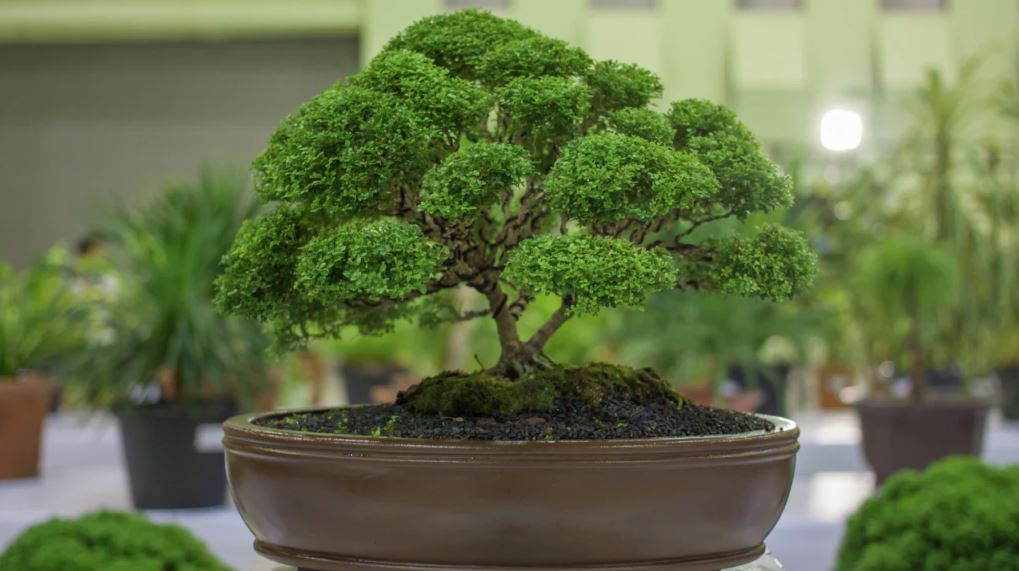
What makes bonsai so captivating is not merely its size but its illusion of vastness. A bonsai is not a miniature tree; it is a tree that suggests an entire landscape within its small frame. This mastery of perspective requires the cultivator to understand proportion, depth, and visual balance. The spacing of branches, the tilt of the trunk, and even the placement of moss at the base all contribute to this illusion. A well-crafted bonsai feels infinite, drawing the viewer’s imagination beyond the boundaries of its container. This perception of endlessness within confinement speaks to a universal truth: that beauty often thrives under limitation.
Equally important is the use of negative space. In bonsai, what is left empty carries as much weight as what is filled. The open spaces between branches allow the eye to rest, evoking the sky or wind. This intentional emptiness mirrors the Japanese aesthetic of ma, a pause or interval that gives meaning to form. Through these subtleties, bonsai transcends horticulture and enters philosophy. The cultivator learns to appreciate stillness as much as growth, silence as much as sound. It becomes an art not only of creation but of omission, where the unseen completes the seen.
Seasons Within a Tray of Soil
A bonsai experiences time differently than the world around it. Within its shallow container, the cycle of seasons unfolds with amplified sensitivity. Spring brings tender shoots and delicate buds, demanding careful feeding and pruning to shape new growth. Summer offers vigor and lushness but also the risk of overexposure to heat or drought. Autumn transforms the canopy into a canvas of color, a reminder of impermanence, while winter tests endurance, allowing roots to rest and branches to reveal their pure structure. Each season teaches the cultivator a lesson in rhythm and restraint. There is no off-season in bonsai, only continuous dialogue between care and observation.
Seasonal awareness deepens one’s relationship with the tree. A cultivator learns to anticipate transitions, when to water less, when to repot, when to shield from frost. This attentiveness fosters mindfulness, connecting the caretaker’s internal state to the natural world’s tempo. In this sense, bonsai cultivation becomes a reflection of life’s own cycles of growth, loss, and renewal. The tree becomes both teacher and companion, showing that even in confinement, the essence of the seasons can flourish with grace and dignity.
The Global Language of Bonsai
Though its roots lie in East Asia, bonsai has become a global art form that transcends geography and culture. Enthusiasts in Europe, the Americas, and beyond have embraced its philosophy, adapting techniques to local species and climates. Each region adds new interpretations while maintaining the respect for tradition. In tropical regions, for example, species like tamarind or ficus bring vibrant foliage and aerial roots into the art form. In arid landscapes, acacia and desert rose bonsai express resilience through minimalist beauty. This global exchange enriches the art, proving that the principles of patience, harmony, and respect for nature resonate universally.
International exhibitions now celebrate bonsai as cultural bridges. Artists from different continents gather to display creations that embody both personal expression and shared heritage. Workshops and societies foster mentorship, ensuring that techniques and traditions are passed down while evolving with modern understanding. Through this global dialogue, bonsai continues to grow, literally and metaphorically, as a symbol of unity through care. Its language requires no translation, for anyone who has watched a leaf unfold or a branch mature understands its quiet message: that life, when tended with respect, becomes art.
The Role of Time and the Gardener’s Spirit
More than any other factor, time defines the soul of bonsai. Decades may pass before a tree achieves its ideal form. Some bonsai are inherited, their caretakers only temporary custodians in a lineage that spans generations. Each artist adds to the narrative, adjusting, refining, and preserving without erasing the work of those before. This continuity mirrors the relationship between humanity and nature, a collaboration that endures beyond individual lifetimes. The gardener’s role is not ownership but stewardship, ensuring that beauty persists through care and continuity.
The spirit cultivated through this process shapes the gardener as much as the tree. Patience deepens, observation sharpens, and humility grows. Mistakes are inevitable, but each teaches more than perfection ever could. A broken branch or failed design becomes part of the learning curve. Over time, the gardener’s ego diminishes, replaced by quiet respect for the slow rhythm of growth. In this humility lies freedom. To nurture a bonsai is to embrace impermanence, to find contentment in gradual progress, and to understand that mastery is never final. The bond between artist and tree becomes a lifelong meditation on coexistence.
The Tree That Reflects the Soul
Every bonsai is more than a crafted plant; it is a reflection of the person who tends it. Within its curves and scars lies a portrait of dedication, resilience, and grace. As the years unfold, the tree’s transformation mirrors the cultivator’s inner journey. It teaches the value of slowing down, of finding beauty in imperfection, and of trusting time as the ultimate artist. In its smallest form, a bonsai contains the vastness of forests, the whisper of winds, and the patience of centuries. It reminds us that greatness does not always require scale, and that in the smallest living forms, the universe reveals its quiet perfection. Through bonsai, humanity learns once more to listen, to the earth, to growth, and to the silent wisdom of life itself.